On the trail of immune cells
Carlos Talavera-López has recently been appointed junior professor of systems immunology at the University of Würzburg. His special focus is on processes inside cells. To do so, he relies on deep learning methods.
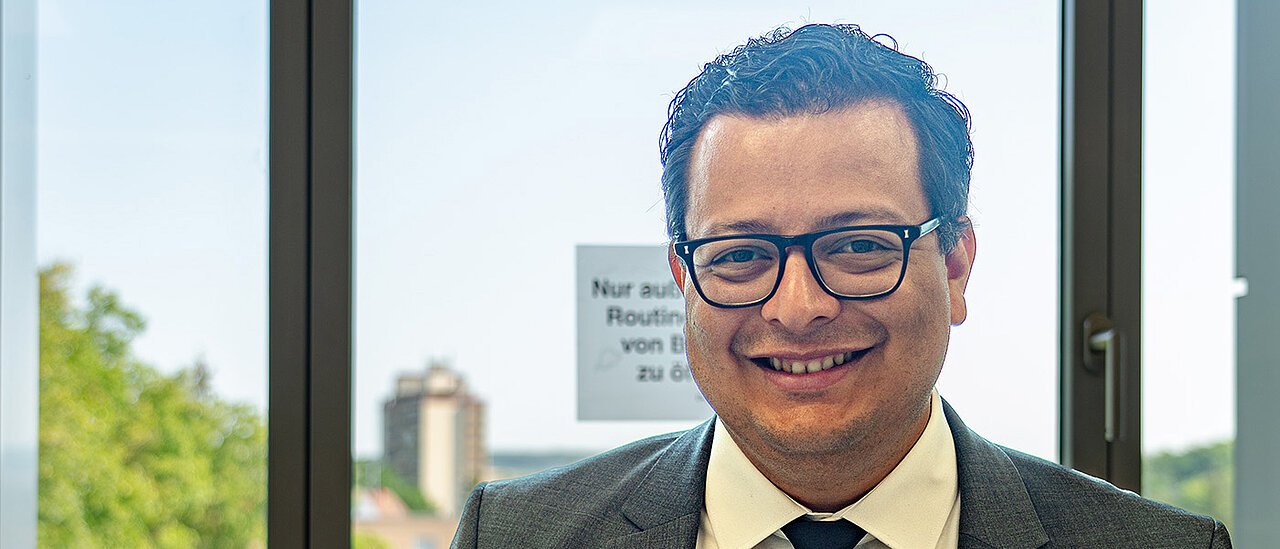
Picture: Anika Grafen / Max-Planck-Research group for Systems Immunology
Carlos Talavera-López is an expert in computational biology, machine learning, and medicine. In his role as a clinical scientist, he recently conducted research at the Institute of Computational Biology, Helmholtz Munich and the Division of Infectious Diseases and Tropical Medicine at the Ludwig-Maximilians-University Munich. Now, as an assistant professor in the Department of Systems Immunology at the University of Würzburg, he combines different computational approaches to elucidate the cellular circuits of immune cells in health and disease.
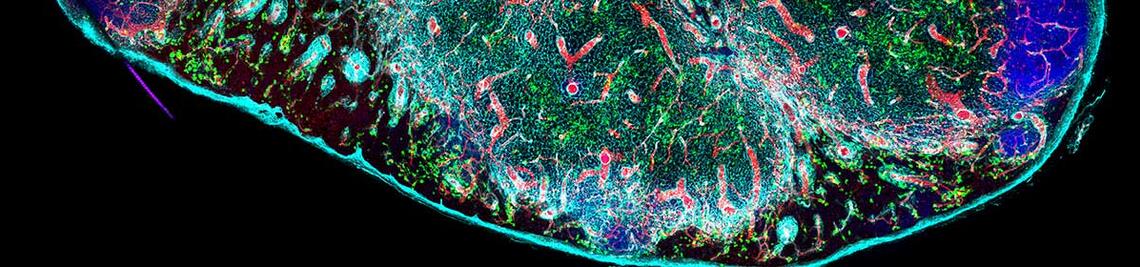
During his postdoctoral training, Dr. Talavera-López worked with statistical and deep learning methods and combined them with spatially-resolved single-cell technologies. This combination allowed him and his colleagues to decipher the cellular circuits of immune cells in the adult human heart, uncovering their potential changes in these functions during cardiac tissue repair.
As a Junior Group Leader at Helmholtz Munich, he applied deep learning methods to elucidate cell-cell interactions and metabolic activity using spatial transcriptomics during inflammation and tissue repair.
Research on immunology, infection biology and chronic inflammation.
"In my new role as an assistant professor, my laboratory is embarking on an exciting new trajectory," says Prof. Talavera-López. "My team and I will employ cutting-edge technologies and methods to delve deeper into the realms of immunology, infection biology, and chronic inflammation." With his team, he will initialy focus on two main areas of research - first, the scientists want to understand how genome plasticity controls host and pathogen adaptation during the course of infection. Second, they will explore the dynamics of cellular communication, transcriptional regulation, and metabolism during development across different organs and species.