Rasche Group
Dissecting Multiple Myeloma and its Microenvironment
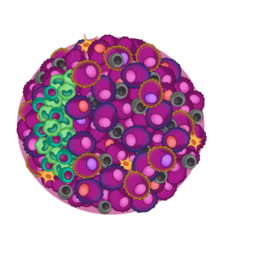
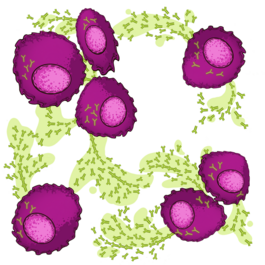
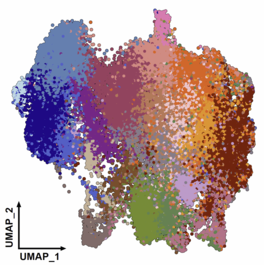
Multiple Myeloma is the most common cancer of the bone marrow (BM). Despite significant improvement in overall survival, most patients develop refractory disease and myeloma remains largely incurable. Myeloma is the paradigm of a tumor in its microenvironment. Similar to healthy plasma cells, myeloma cell survival is dependent on specific cell-cell interactions with non-malignant cells in the BM. This interplay takes place in the plasma cell survival niche, a poorly characterized micro-anatomical structure along the BM capillaries. In this niche, oxygen supply and nutrients are restricted, which creates a unique metabolic environment. Our group explores this multicellular ecosystem using state of the art technology with the aim to develop novel treatments for myeloma.
Select publications
Anilkumar Sithara, A. et al. Composition and Functional State of T and NK Cells in the Extramedullary Myeloma Tumor Microenvironment. Blood Cancer Discov 7, 250–265 (2026). https://doi.org/10.1158/2643-3230.BCD-25-0170
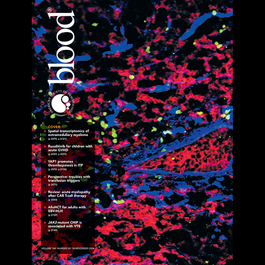
John, M. et al. Spatial transcriptomics reveals profound subclonal heterogeneity and T-cell dysfunction in extramedullary myeloma. Blood 144, 2121–2135 (2024). https://doi.org/10.1182/blood.2024024590
Duell, J. et al. Sequential antigen loss and branching evolution in lymphoma after CD19- and CD20-targeted T-cell-redirecting therapy. Blood 143, 685–696 (2024). https://doi.org/10.1182/blood.2023021672
Zhou, X. et al. Changes in T-cell subsets, preexisting cytopenias and hyperferritinaemia correlate with cytopenias after BCMA targeted CAR T-cell therapy in relapsed/refractory multiple myeloma: Results from a prospective comprehensive biomarker study. Br J Haematol 205, 999–1010 (2024). https://doi.org/10.1111/bjh.19515
Lee, H. et al. Mechanisms of antigen escape from BCMA- or GPRC5D-targeted immunotherapies in multiple myeloma. Nat Med 29, 2295–2306 (2023). https://doi.org/10.1038/s41591-023-02491-5
Rasche, L. et al. The spatio-temporal evolution of multiple myeloma from baseline to
relapse-refractory states. Nat Commun 13, 4517 (2022). https://doi.org/10.1038/s41467-022-32145-y
Da Vià, M. C. et al. Homozygous BCMA gene deletion in response to anti-BCMA CAR T cells in a patient with multiple myeloma. Nat Med 27, 616–619 (2021). https://doi.org/10.1038/s41591-021-01245-5
Truger, M. S. et al. Single- and double-hit events in genes encoding immune targets before and after T cell-engaging antibody therapy in MM. Blood Adv 5, 3794–3798 (2021). https://doi.org/10.1182/bloodadvances.2021004418
Leo Rasche

Junior Group Leader
Leo Rasche, MD, attended medical school at the University of Würzburg in Germany and earned his MD in 2009, with the focus on experimental pathology, where he subsequently completed his residency in internal medicine and was a consulting specialist in internal medicine and hematology/oncology. Between 2016 and 2018 he has been a postdoctoral fellow at the Myeloma Institute at the University of Arkansas for Medical Sciences in Little Rock, where he studied medical imaging, tumour genomics, tumour evolution, and immunotherapy approaches for treating multiple myeloma. In 2018 he was appointed an assistant professor of research at the University of Arkansas for Medical Sciences. In summer 2018, Dr. Rasche returned to Germany where he serves as an attending physician on the myeloma service at the University hospital of Würzburg. In 2024, he was appointed to a W2 professorship in clinical and translational myeloma research at the University hospital of Würzburg.
Emilia Stanojkovska
Technician
Emilia finished her MTL (medical technologist for laboratory analysis) training in 2017 at the Johannes Gutenberg-University in Mainz. She gathered some years of experience in the routine diagnostics, before she joined in May 2020 the group of Prof. Dr. Leo Rasche as a TA.
She currently manages the organization, maintenance and daily operations of the laboratory while working closely with clinical teams to coordinate and process patient samples and support physician-led research projects. Her expertise includes cell culture, flow cytometry, molecular biology, like single-cell RNA sequencing, and histology, including immunohistochemistry & state-of-the-art spatial transcriptomics. Furthermore, she also provides introduction & training on the Attune flow cytometer.
Hanna Fischer
Technician
Hanna joined Prof. Dr. Leo Rasche's team in 2024, having completed her MTL training at the Würzburg University Hospital. During her TA training she gained valuable experience through an internship in AG Rasche .
Her expertise includes a broad range of laboratory techniques, including histology, cell culture, and flow cytometry, complemented by experience with advanced molecular profiling technologies such as bulk RNA sequencing, single-cell RNA sequencing, and Visium HD spatial transcriptomics.
She processes human clinical samples in close collaboration with clinical research partners and contributes to preclinical mouse studies in support of ongoing research projects. Her current responsibilities also include cell culture work, such as preparing conditioned media and aliquoting. She further helps ensure the smooth day-to-day operation of the laboratory by managing the ordering of laboratory supplies.
Zahra Salehi
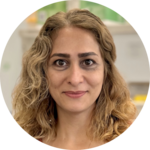
PostDoc
Zahra obtained her PhD in Molecular Biology and Biotechnology from the University of León, Spain, and subsequently completed a postdoctoral fellowship in the Department of Cell Biology at St. John's University, USA.
Since joining Prof. Dr. Rasche's research group at the University Hospital of Würzburg in May 2024, her research has focused on understanding the biology of dormant multiple myeloma cells, which are believed to underlie disease relapse. By integrating multicolor flow cytometry with single-cell transcriptomic approaches, she aims to uncover the molecular mechanisms underlying tumor cell dormancy to develop more effective therapeutic strategies for preventing disease relapse.
Mara John
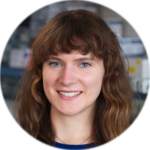
PostDoc
Mara studied Human Biology (Biomedical Science) with focus on tumour biology in Marburg at the Philipps-University. In October 2020 she started her PhD in the labs of Dr. Angela Riedel and Prof. Dr. Leo Rasche at the MSNZ in Würzburg.
Her PhD project focused on the tumour microenvironment heterogeneity in multiple myeloma, with a particular interest in extramedullary disease. She employed spatial transcriptomics and single-cell sequencing techniques. Upon completing her PhD in June 2025, she intends to characterise the T-cell niche, paying particular attention to the impact of chemotherapy on it. To this end, she employs multi-colour flow cytometry and methods to evaluate cellular bioenergetic states, as well as state - of - the - art sequencing techniques.
Moutaz Helal
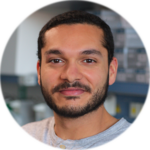
PhD Student
Moutaz obtained his bachelor’s degree in pharmacy and biotechnology in Egypt, where he developed a deep interest in cancer research. He pursued his master’s in biochemistry at the University of Würzburg and subsequently joined the MSNZ to complete his PhD. Having recently submitted his doctoral thesis on spatial heterogeneity in tumor niches, his research contributions have been featured in two publications as a co-first author, alongside several other co-authorships.
As a postdoctoral researcher in the AG Riedel group and an MSNZ Fellow, Moutaz now studies how fibroblasts remodel metastatic tumor-draining lymph nodes in breast cancer, combining single-cell RNA sequencing with spatial transcriptomics to map how the lymph node microenvironment changes as cancer spreads. Furthermore, to support his colleagues and streamline the analysis of these high-throughput sequencing datasets, he actively engineers robust computational workflows and develops interactive R Shiny applications.
Nazia Afrin
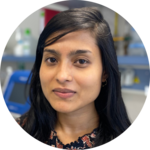
PhD Student
Nazia completed her Bachelor’s in ‘Mathematics’ and obtained a Master’s in ‘Applied Mathematics’ in Bangladesh. During this time she developed a passion for the life sciences. She therefore decided to pursue a second Master's programme in ‘Computational Modelling and Simulation’ at the Technical University of Dresden, focusing on ‘Computational Life Science’. In July 2022, she started her PhD in Prof. Dr. Leo Rasche's research group at the MSNZ in Würzburg.
As a bioinformatician, she is involved in various collaborations that entail analyzing multi-omics data, including bulk and single-cell RNA sequencing, spatial transcriptomics, as well as analysis of long and short read NGS data. Her PhD project focuses on improving existing therapeutic strategies for relapsed/refractory multiple myeloma and diffuse large B-cell lymphoma through the computational analysis of integrated multi-omics data.
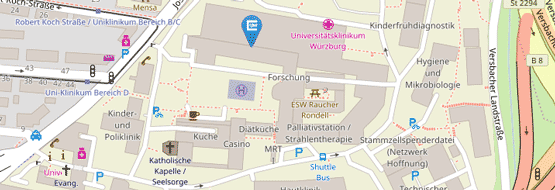
You can find us here:
Institute for Virology and Immunobiology
MSNZ
Versbacher Str. 7
97078 Würzburg