Epitope-dependent acute inhibition and potentiation of N-methyl-d-aspartate receptors by GluN1 autoantibodies
11/06/2026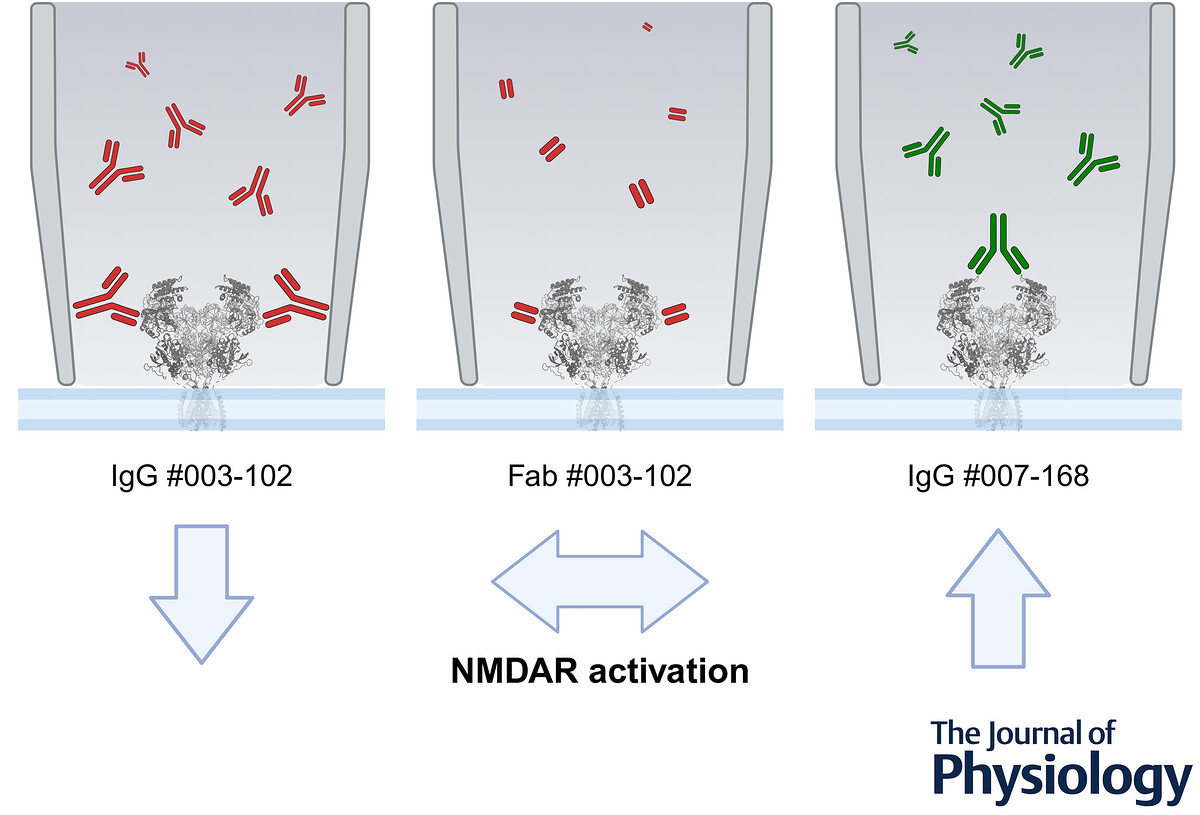
Epitope-dependent acute inhibition and potentiation of N-methyl-d-aspartate receptors by GluN1 autoantibodies
Shang Yang, Johanna Heckmann, Maximilian Zettner, Keiichi Hasegawa, Taha Abdulla, Shiqiang Gao, Stephan Steinke, Michael Hust, Harald Prüss, Hiro Furukawa, Christian Geis, Manfred Heckmann, Jing Yu-Strzelczyk (2026)
J Physiol 0.0 (2026) pp 1–16, doi.org/10.1113/JP287479#support-information-section
Transfer of autoantibodies targeting ionotropic N-methyl-d-aspartate (NMDA) receptors from patients with autoimmune encephalitis to mice induces characteristic disease signs. The long-term effects of pathogenic antibodies include immunoglobulin G (IgG)-induced cross-linking and receptor internalization. We investigated the direct and immediate impact of two specific pathogenic patient-derived monoclonal autoantibodies (IgG #003-102 and #007-168) on NMDA receptor (NMDAR) function. We performed cell-attached recordings from cells transfected with the GluN1-3a and GluN2A subunits of NMDARs. IgG #003-102 binds to the R2 lobe of the amino-terminal domain (ATD) of the glycine-binding GluN1 subunit. It significantly reduced the number of simultaneous NMDAR openings compared to controls at both low and high concentrations of glutamate and glycine. Closer examination revealed that IgG #003-102 rapidly reduced the number of open receptors and shortened receptor-opening bursts. However, antigen-binding fragments of IgG #003-102 did not reduce receptor openings. By contrast, IgG #007-168, which binds to the top of the R1 lobe of the GluN1-ATD, potentiated the NMDAR response. In conclusion, patient-derived IgG #003-102 inhibits NMDARs within seconds, before receptor internalization, and the full IgG is required for this acute inhibitory effect. This suggests that monovalent IgG #003-102 constructs could be a new treatment strategy to shield a pathogenic epitope on NMDARs.